You will use de-escalation on more calls than any drug in your kit. The agitated patient, the terrified family member, the intoxicated friend who decides you’re the problem — talking a scene down is one of the highest-frequency skills in EMS, and one of the least formally taught. Most of us assembled it from instinct and bad experiences. The good news: there’s an actual body of doctrine here, built by people who spent careers studying conflict. Here’s the field-usable core, in three layers.
Layer 1 — Awareness: Cooper’s Colors
Col. Jeff Cooper’s color code isn’t about threat levels around you — it’s about the state of attention inside you:
- White — switched off, head down in the phone or the paperwork. Fine on the couch at home; a liability on scene.
- Yellow — relaxed alertness. No specific threat, but you’re taking in the room: who’s here, what’s the mood, where are the exits. This is the working default for the entire call — not just the walk to the door.
- Orange — something specific has your attention. The voice from the back room getting louder, the bystander pacing, the tension you can’t name yet. You don’t panic; you reposition, keep the exit open, and form an if-then plan.
- Red — the if-then triggers. You act: disengage, retreat, stage for police.
The point of the ladder is to never make the jump from White straight to Red — that jump is where people freeze. “Scene safety” is not a checkbox at the top of the call. It’s a continuous state of Yellow, for the whole call, every call — scenes that were calm at dispatch go loud twenty minutes in.
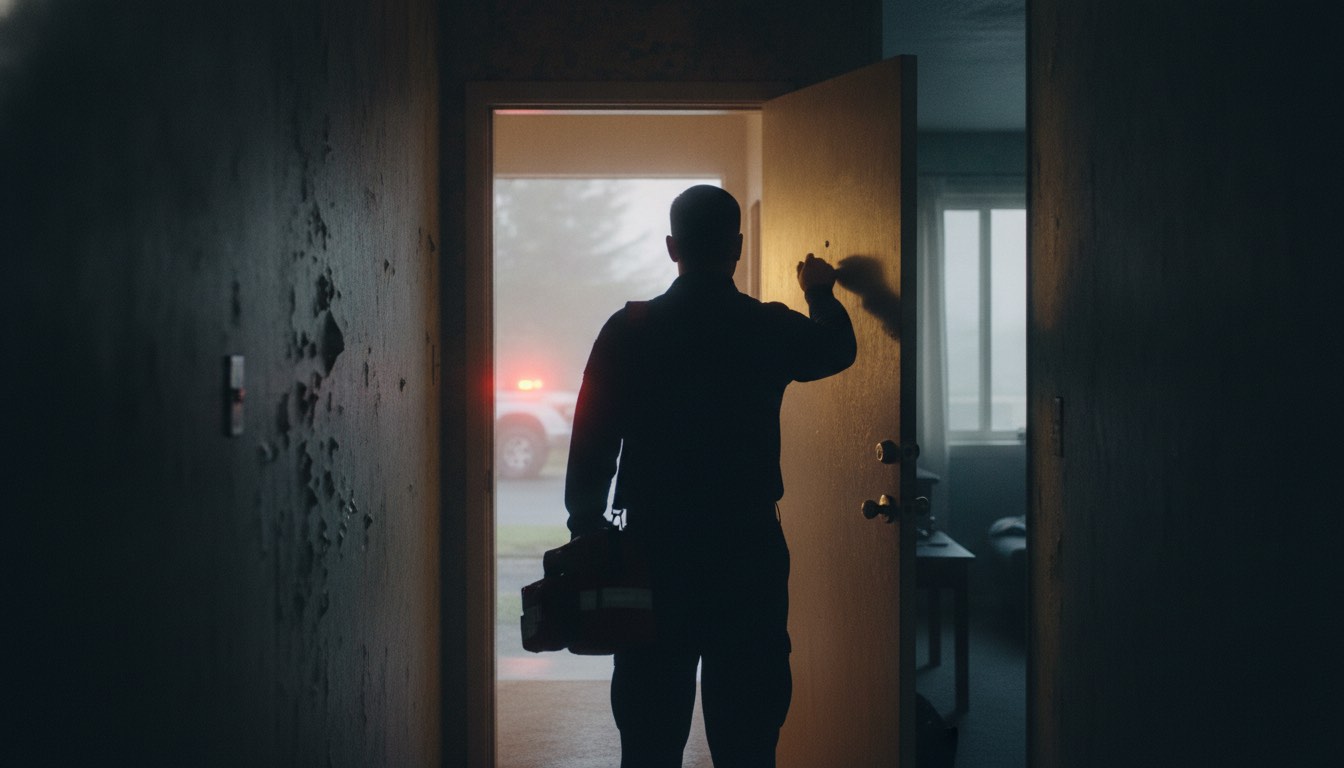
Layer 2 — Intuition: The Gift of Fear
Gavin de Becker’s central claim is that intuition is not mysticism — it’s pattern recognition running faster than conscious thought. When the hair on your neck stands up in a “routine” apartment, your brain has usually already registered something real: a detail out of place, a tone, a posture. That feeling is data. Don’t argue yourself out of it because you can’t cite the reason yet.
De Becker also catalogued behaviors that reliably precede trouble — worth knowing on scene: the person who’s too charming and helpful with an agenda; unsolicited promises (“I’m not going to hurt anybody, okay?”); and above all, refusing to hear “no.” Someone who keeps pushing past a clearly stated boundary is telling you something about what comes next.
The operational consequence: retreat is a clinical decision, not a failure. If the scene is going wrong, you are allowed to leave and stage. No patient outcome is improved by an injured medic.
Layer 3 — Words: Verbal Judo
George Thompson — an English professor turned street cop — built Verbal Judo on one insight: when words fail, force follows, so treat language as a tactical skill. His durable pieces:
The five universal truths. Nearly everyone, agitated or not, wants the same five things: to be respected, to be asked rather than ordered, to be told why, to be given options rather than threats, and to get a second chance. Most escalations happen when one of these is denied. Most defusings happen when one is restored.
Deflect, don’t absorb. Insults are bait. The judo move is to let the words pass and redirect to the goal: “I hear you — and here’s what I can do for you right now.” You don’t have to win the argument. You have to win the outcome.
LEAPS — Listen, Empathize, Ask, Paraphrase, Summarize. Paraphrasing is the sleeper move: “So what I’m hearing is nobody’s told you anything for two hours, and that’s why you’re furious.” Feeling accurately heard defuses more anger than any command ever will.

What the Clinical Literature Adds
Emergency medicine formalized much of this in Project BETA’s de-escalation consensus (Richmond et al., 2012). The field-relevant distillation:
- Respect personal space — two arm’s lengths, with an exit path for both of you.
- One person talks. Multiple voices feel like being surrounded. Pick the talker; everyone else goes quiet and works.
- Keep it short, and repeat. Agitated brains process in fragments. Simple sentences, patiently repeated, beat one brilliant paragraph.
- Name the feeling, set honest limits, offer real choices. “I can see you’re angry. I can’t let anyone get hurt here. Would you rather sit on the couch or the chair while we talk?” Agree where you can — even agreeing to disagree is agreement.
- Watch your own body. Hands open and visible, angled stance, slow your breathing. Their nervous system is reading yours, and calm is contagious in both directions.
When It Doesn’t Work
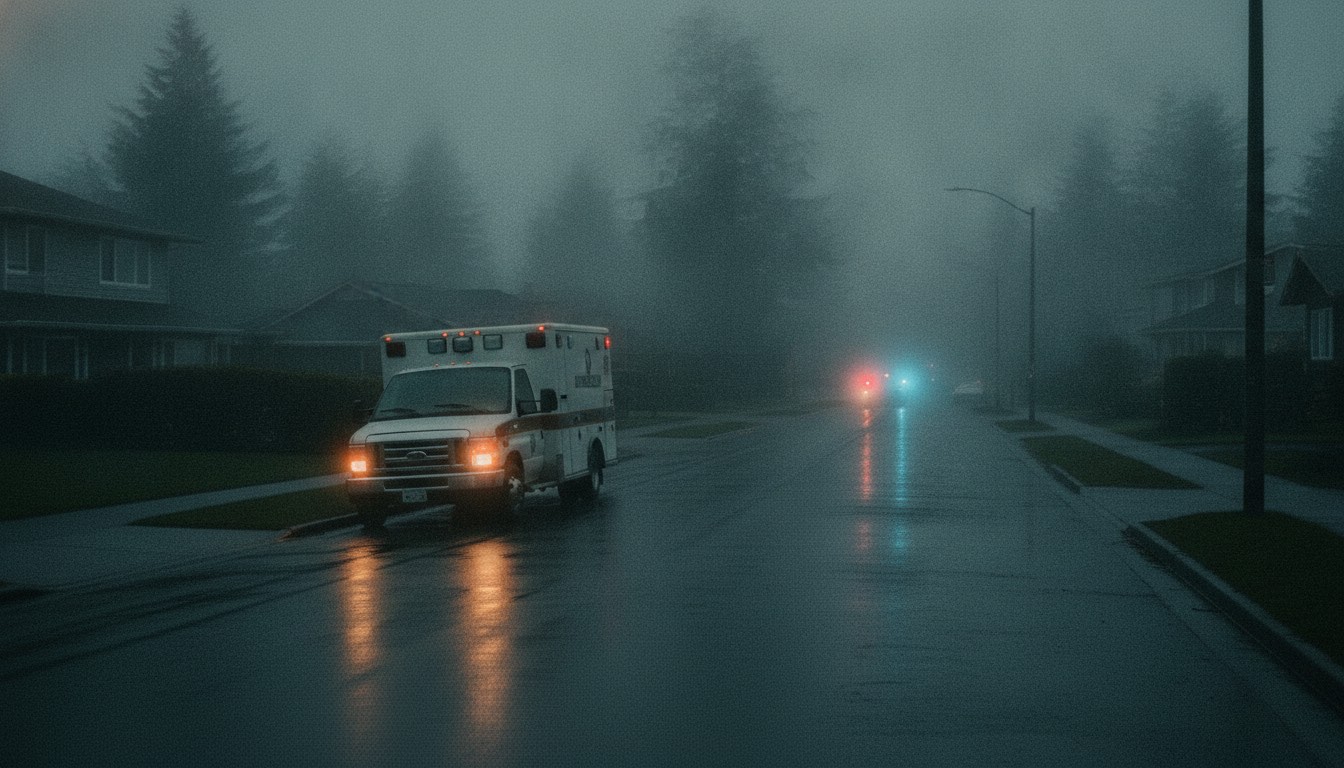
Defusing has a failure mode, and pretending otherwise gets people hurt. If the ladder is climbing despite your best work — Orange turning Red — the skill that matters is the exit: disengage early, stage, and let police make the scene safe. Knowing when to stop talking is part of the skill.
The Pearl
De-escalation is three stacked layers: stay in Yellow so nothing ambushes you (Cooper), treat gut unease as data and leave when the scene tells you to (de Becker), and use words tactically — respect, options, one calm voice, short sentences, real listening (Thompson, Project BETA). You don’t have to win the argument; you have to win the outcome. And when talking stops working, retreating to stage isn’t failing the patient — it’s making sure there’s still a crew to treat them.
References
- Richmond JS, et al. Verbal de-escalation of the agitated patient: consensus statement of the American Association for Emergency Psychiatry Project BETA De-escalation Workgroup. West J Emerg Med. 2012;13(1):17–25. PubMed
- Thompson GJ, Jenkins JB. Verbal Judo: The Gentle Art of Persuasion. William Morrow; updated ed. 2013.
- de Becker G. The Gift of Fear: Survival Signals That Protect Us from Violence. Little, Brown; 1997.
- Cooper J. Principles of Personal Defense. Paladin Press; 1989.
This clinical pearl is for educational discussion only. Always follow your local protocols and medical direction. Your protocols exist for good reasons — this content is meant to enhance your clinical thinking, not replace your guidelines.
Want to go deeper? Our courses are scenario-based, evidence-informed, and built by working paramedics.
Browse All Courses